
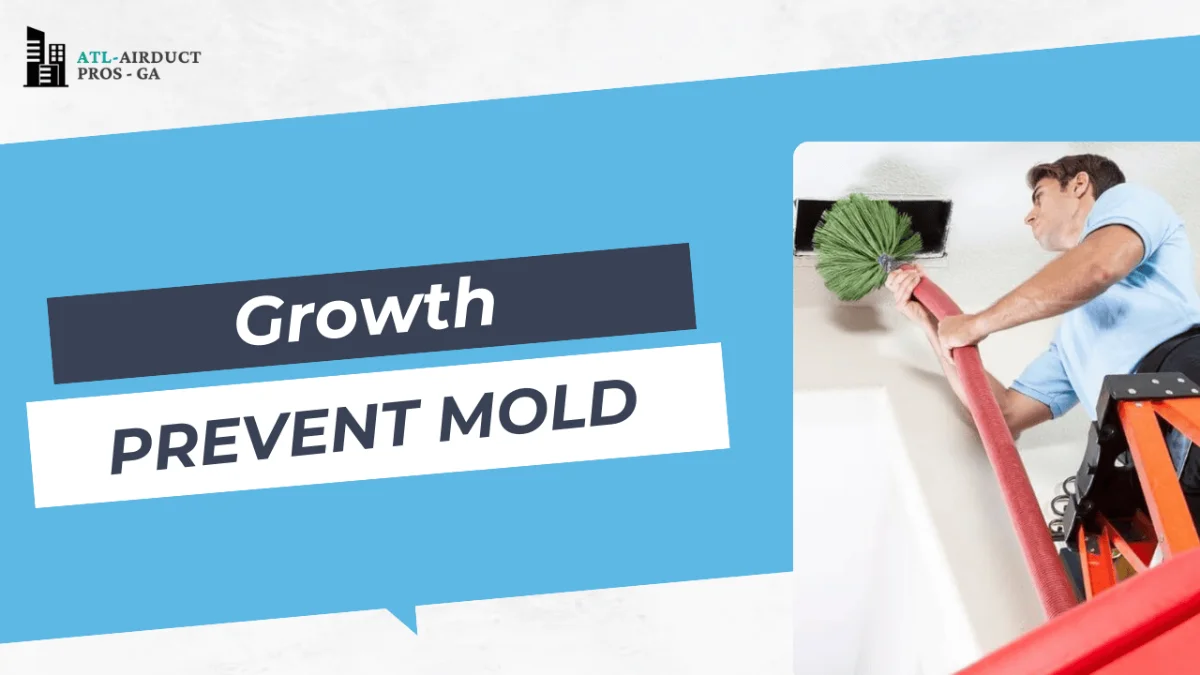
The Atlanta’s climate is beautiful—but it’s also prime territory for indoor mold. Mold looks bad, smells worse, and can damage your home and its resale value. It’s also linked with health issues like asthma, allergies, sinus problems, and upper respiratory infections.
The good news: most mold problems are preventable. In this post, we’ll cover why mold grows, how to stop it, how regular air duct and ventilation maintenance fits into the picture, and what to do if you find mold.
Mold 101: What It Is and Why It Grows Indoors
Mold is a fungus found everywhere outdoors. It releases microscopic spores that easily get into our homes through doors, windows, on pets, and on us.
Indoors, mold needs three things to grow: spores + a food source + moisture.
Food sources are easy to find: paper, cardboard, wood, drywall, dust, even some glues and fabrics.
You can’t eliminate spores or all food sources—so the winning strategy is to remove moisture.
The first rule of mold prevention: keep it dry.
Where Does Indoor Moisture Come From?
Water From Outside
Leaky roofs, windows, doors, and siding
Damp crawlspaces that allow moisture to rise into the house
Water From Plumbing
Leaking pipes, valves, fixtures, washing machine hoses
Condensation on cold water lines
Dryer ducts that don’t vent all the way outside
Everyday Living
Showers, cooking, drying clothes, and even breathing add moisture to the air
Condensation Explained
When moist indoor air touches cool surfaces (windows, exterior walls, cold pipes), water condenses. You’ll notice it on glass right away—but you may not see it on a cool wall behind a couch until mold appears. That’s why monitoring humidity matters.
Monitor Your Humidity
Pick up a hygrometer (relative humidity gauge) for around $30. Aim for 30–50% RH.
Red flags without a gauge: window fogging on the room side of double-pane windows and sweating cold-water pipes.
Ventilation and Drying: Your Best Defenses
Whole-House Ventilation
Washington homes built after 1991 typically have a ventilation system. Learn how yours works and use it.
These systems exhaust moist, stale air and bring in drier outside air.
Bathroom and Kitchen Exhaust
Always use bath fans during and after showers; let them run 30–90 minutes until the room is dry.
Use range hoods while cooking and for several minutes afterward.
Quick test: can the fan hold up a tissue? If not, it’s underperforming.
Confirm fans and hoods vent outdoors—not into an attic or crawlspace.
No Fans? Try a Flush-Out
Briefly open windows and doors to exchange moist indoor air with cooler outside air, then close up and reheat to about 70°F. Even on rainy days, warming that fresh air lowers its relative humidity.
Dehumidifiers
Great for basements and daylight basements.
Most work best at 65°F and warmer.
Air Ducts and Mold: Why Regular Cleaning and Maintenance Help
Clean, dry ductwork supports healthy airflow and moisture control. While spores are everywhere, ducts that are dirty, wet, or poorly sealed can make mold problems more likely. Here’s how to stay ahead of it:
What to Do Regularly
Change HVAC filters on schedule (often every 1–3 months).
Keep condensate drain pans and AC coils clean and draining.
Inspect supply and return ducts annually for leaks, gaps, or visible debris; seal and insulate as needed to prevent condensation.
Clean and maintain bathroom fan ducts, kitchen range hood ducts, and your dryer vent.
If you notice musty odors when the system runs, visible mold inside ducts or on components, water damage, or vermin—schedule a professional duct cleaning.
Professional Cleaning Tips
Choose a qualified contractor (look for NADCA certification).
Ask for before/after photos and a written scope: source-removal methods, containment, and proper disposal.
Routine, calendar-based whole-home duct cleaning isn’t always necessary; prioritize inspection and clean as needed, especially after renovations, water events, or if you have heavy shedding pets or dust.
How to Clean Small Mold Areas Yourself
Fix the moisture source first. If moisture returns, so will the mold.
Decide What to Keep or Toss
Hard, non-porous items: usually cleanable
Porous or fleecy items: often better to discard
Protect Yourself and the Area
Wear gloves, mask, eye protection
Tape plastic sheeting to isolate the area
Clean the Mold
Lightly mist with soapy water, scrub thoroughly, dry completely
Bleach not recommended for most materials
If mold is dry/dusty, cover gently before cleaning to prevent spread
Keep it dry afterward to prevent regrowth.
Bigger Jobs: When to Call for Help
If mold is inside walls, widespread, or more than you can handle:
Build a plastic enclosure
Use a box fan blowing outdoors
Cut out and bag moldy drywall (extend 2 ft beyond visible mold)
Scrub and seal wood before closing up
When in doubt, hire a professional remediator.
Do You Need to Test for Mold?
Usually, no. If you can see or smell mold, you already know what to do: fix moisture and clean it.
A Note for the Pacific Northwest
These recommendations are designed for cool, damp climates. Hot, humid climates may require additional tools like AC-based dehumidification.
Helpful Checklist
Keep RH 30–50%
Run bath/kitchen fans outdoors
Inspect for leaks
Maintain HVAC
Clean exhaust ducts and dryer vent
Use dehumidifiers in damp areas
Address mold early; call pros for large areas