
Air Duct Cleaning | Behind The Scenes Air Duct Cleaning ATL
Improve your home or business air quality with professional air duct and dryer vent cleaning in Atlanta, GA. Our certified HVAC experts ensure cleaner air, better system efficiency, and a healthier environment.
hey I know you’re kind of interested in what’s going on here with this blower motor all up on your timeline check it out I’m going to show you a lot about duck cleaning some things you didn’t even know and I’m about to teach you today stay tuned I’m going to show you how you can earn 250 bucks right now hey you you watching this video I know you’re an HVAC contractor and I know a lot of you think that duck cleaning is a scam I’m about to show you like 10,000 reasons why it’s not when it’s done by hyper and this is why you should be referring hyper to all of your custom customers we have a flat rate pricing it’s easy to understand it’s bookable online we use massive vacuum trucks we’re certified and we’re going to take care of your customers the same way you would and on top of that I’m going to give you a $250 referral
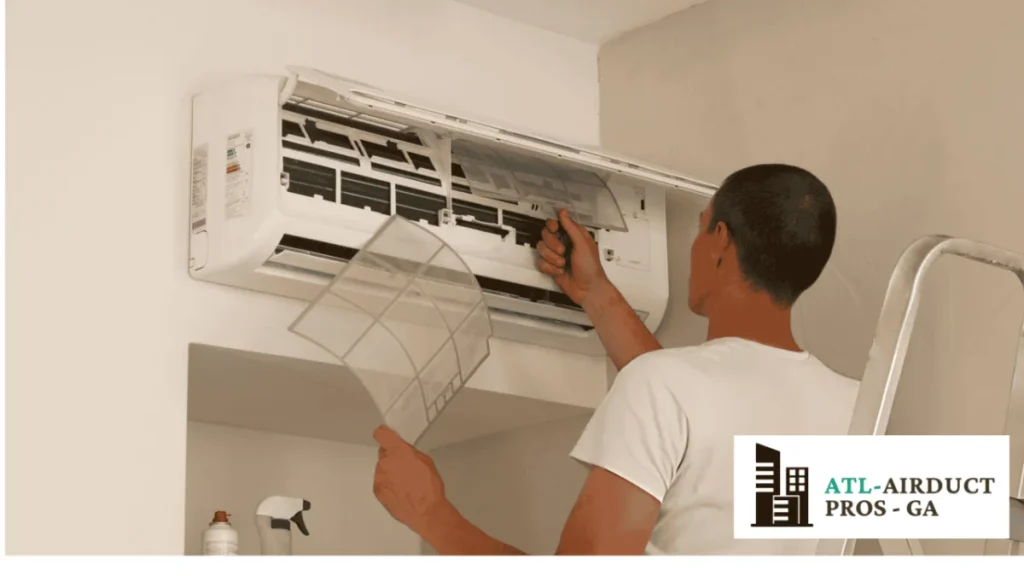
Behind The Scenes On This Project
let me show you a little bit of behind the scenes in this project on why it’s so bad here’s the air handler look at this insulation in here completely covered and who knows what look at the blower motor it’s trashed we’re going to get that all cleaned up for these folks here you want to see what the inside of their duck work lookss like every duck cleaning we collect air samples on a scientific level we’re proven to you that we made an improvement in your air quality don’t let me convince you look how bad these vents are yeah you want to see the truck oh yeah there it is that’s a $225,000 duck Lan truck we’re going to fire that up the bags on the top are going to slap around it’s going to suck everything out of the duck work
Coil Plates, Wiring, And The Not-So-Fun Essentials
so I’m going to go ahead and get started sometimes taking those coil plates off can be a little [Music] tricky even though I’ve done this a million times I still always take pictures of the wiring you just never know [Music] all right you and I both know that this is not fun to do but it needs to be done it’s an important essential part of the duck cleaning process and this is why you should put your trust in me and Hyper to know that the service is getting done correctly
Building Negative Air And Protecting The Coil
Alright, we’re going to keep going — and you’d be surprised at how good this little Dewalt drill works. It functions like a screwdriver too, which is pretty cool.
Now, here’s the trick — you’ve got to be careful, because this one tends to pull a bit. See, that’s how you know I’ve done a bunch of these!
At this point, even though I’m not talking to you directly, I’m sure you’re starting to get a sense of who we are — a professional air duct cleaning team that knows exactly what we’re doing and is the right choice for your duct cleaning referrals and business partnerships.
Blower Motor and Air Filter Setup
So, I’ve got the blower motor removed and the air filter taped. What this does is build negative air pressure on the return side when it’s time to clean.
On this side, I’ve placed a balloon (or bladder) to keep the supply side under constant negative air pressure through the truck outside. This helps prevent debris from falling down the plenum into the coil.
Common HVAC Cleaning Mistakes
Many HVAC technicians make a few common mistakes:
- They forget to block off the coil, which allows dirt and debris to drop into it.
- They use a roto brush without proper precautions, leaving buildup on the corners and coil.
- They skip cleaning the coils altogether.
I’ve got everything exposed, so I’m going to clean both the top and bottom of the coils right here in place, then rinse and drain everything through the condensation tube.
It’s a simple and efficient process that doesn’t take long at all.
When Air Filters Are Neglected
Often, when customers forget to change their air filters, the bottom side of the coil gets completely layered with dust and debris — sometimes thick enough to look like the entire body of a cat!
That’s not the case here today, but when it does happen, we take care of it completely.
Pre-Vacuuming Boots Before The Clean
so right now what’s happening is upstairs we got Mike up there vacuuming out the boots cuz it had a bunch of construction debris I’m going to show you what that looks like before we start the cleaning process so right now Mike’s taking a picture of the vent before he vacuums it he’s going to remove all that with the hepac first and what this is doing this is making the cleaning process so much easier by doing this we’re not trying to push that debris through the duck work seemed like a lot of extra work but it actually makes the cleaning process a whole lot easier when we get into the main lines now we’re just G to Simply go in there snap another piter make sure you got all that out of the boots voila now it’s ready for a hyper clean so it’s just that simple first we get the big stuff out because not that our trucks can’t pull it out it’s just it takes a lot more time and we want to be as efficient as possible because typically a system takes about 6 to 8 hours to clean
Air Quality Report: PM2.5, PM10, Chemicals, And Solutions
Right now, I should have my initial air quality report sent to my email. We’ll go over that in a minute, but first, I want to show you what I’m seeing on my report.
The particulate matter in this home is super high, and the chemical levels are elevated as well. The formaldehyde levels are through the roof — and that’s something to be concerned about because formaldehyde is a known cancer-causing chemical.
What’s in the Air?
The good news is that this can be rectified with:
- Ultraviolet (UV) lighting
- Charcoal filters to reduce harmful chemical levels
The report shows PM2.5 levels, which indicate fine dust particulates. These are 30% smaller than a human hair strand, meaning they:
- Pass through most air filters
- Bypass your body’s natural defenses
- Enter your bloodstream, carrying mold spores, dust mites, viruses, germs, bacteria, and odors
The system also measures PM10 levels, which are larger particulates but still affect indoor air quality.
Why This Matters for You and Your Clients
These air quality tests are part of the work we do in every client’s home. When your clients experience this level of detailed service, they’ll truly appreciate that you referred them to us.
We’ve been in this industry for over 20 years, and our goal is to make every referral smooth and rewarding.
Referral Reward:
You can earn $250 per duct cleaning referral — we handle the job, take care of your customer, and everyone wins.
Simple, Transparent, and Online
Our service is:
- 100% bookable online
- Flat-rate pricing (no gimmicks or hidden fees)
- Affordable with 0% interest financing options for qualified customers
When you refer us, you can tell your customer:
“These aren’t the cheapest guys, but they do the best job money can buy — and it’s worth every penny.”
The Next Steps
Once we’re done reviewing the report, Mike will start vacuuming out the vents, and I’ll get ready to fire up the truck to begin the full cleaning process.
Your customers will receive a detailed air quality report just like this — giving them real insight into what’s been floating around in their home’s air for years.
HEPA Matters And Why We Don’t Use A Shop Vac For Ducts
all right I’m glad this is down here this is actually a shop back right here this is what you do not want to use during the duck cleaning all right that’s what most of our competition uses for duck cleaning we use Pringle trucks or vacuum trucks and big gas power negative air machines but when we do use shot vac style vacuums like I’m going to use right now on this air handler we use HEPA filtered so right now I’m going to hepac this insulation right here now if there were secondary heat exchanger I’d be vacuuming that with the heac too but in this case this is just an 80er
all right I know it might be kind of hard to hear me right now cuz all the the noise in the background and stuff but what I’m going to do now I’m going to go ahead and vacuum out the bottom side of this coil and then when I’m done cleaning the duck work I’m going to vacuum out the top [Music] side all right now that we got that out of the way let’s go upstairs and check on Mike and see how that duck cleaning is going and then I’m going to take you outside and show you the big beast of a pringle truck we got running outside
Branch Cleaning: 200 PSI Air, Brushing, And Whips
all right before it gets real loud what Mike’s going to do is he’s going to pull that piece of tape off right there so now we’re not going to have any blowback in any other vents the only vent we’re working on is one with the tape off so now the duck work is unsealed right there what he’s going to do is he’s going to blow some air at 200 PSI right into that vent see what that’s doing is that’s getting all that loose debris that’s sitting in that boot that we didn’t get from the vacuum and blowing it down into that tube into that Branch now we got a brush that’s scrubbing the duck work so basically anything that’s embedded to the walls of that branch is going to be dislodged by that really stiff brush as it’s scrubbing it and it’s just going to fall down and it doesn’t get sucked into the negative air machine it’s going to be setting in the branch right there and what’s going to happen next is this
all right so now he’s going to blow a little bit more air then he’s going to hook this tentacle whip up with about 15 ft of whip that’s about all it needs see how that works that’s blowing an intense amount of air we’re going to chase that dirt all the way down this Branch with these air whips that branch is going about from there all the way about 15 ft over there to about where the hallway is that’s where the air handler is and the mainline so we got about 15 ft of this and you’ll hear the tone change when you’re doing this type of work when you’ve gotten to the end of the [Music] branch which is probably about there that’s usually it that’s at the elbow so we know that this duck work is now done so now he’s going to get his phone out he’s going to snap a picture of that just to ensure that we got everything out of that boot and out of that branch and that looks good you got a little staining there but nothing you can do about that
Push, Pull, And Negative Air
all right so that’s how we clean the duck work and what’s happening now is all that debris that was in that boot in that branch is now sitting in the mainline and the and at the plenum we have this truck hooked up and that’s sucking everything out into this truck right here through that big hose laying in the yard so that the negative air so what’s happening is these vents are sucking because of that truck and it happens in phases we push and pull but first we push the debris down into the main line it sits there cuz we’re cleaning all the branches first after we’re done with all the branches then we go ahead and clean the main lines and then that supply side will be done we’ll move on to the return side and do the exact same thing
bear with me while I put my booties away it doesn’t matter if we’re in a construction side or not we always have booties on our feet we completely respect our customers homes
The Pringle Vacuum Truck Outside
Alright, so here’s one of our trucks — and this one’s the biggest in our fleet. It’s not guaranteed that this specific truck will be at every job site, but it gives you a solid idea of the power and quality of our equipment.
This truck runs at about 200 PSI of air pressure. Right now, it’s building that pressure up. We call it the Pringle truck, or sometimes the vacuum truck. And unlike those cheap little roto brushes that some companies use, this machine is on another level — it’s a $225,000 truck.
I’m not saying that to brag, but just so you understand that this is serious, professional-grade equipment.
How the Truck Operates
- The air pressure typically runs at around 200 PSI.
- You can actually see it drop when the technician is using air inside — that’s because the system is working in real-time.
- The hose setup wraps around the house and goes straight into the basement, usually through a basement window (that’s where you’ve seen most of the work being done in earlier parts).
Once the air pressure exceeds 200 PSI, the system releases a loud relief noise — this is intentional to prevent the pressure from going higher. The lines are rated for 300 PSI, but that’s simply too much. Sometimes, too much is just too much!
The Biggest and Baddest Truck in the Business
This is truly the biggest and most powerful duct cleaning truck money can buy, and we use it to make you look great in front of your customers. When clients see this setup, they know they’re dealing with professionals.
Your customers will appreciate the referral from Hyper because:
- There’s no system we can’t clean.
- The only thing that’s ever stopped us from working on a project is budget restrictions — never capability.
- We handle any size project, as long as the budget allows.
Simple Flat-Rate Pricing
For residential customers, we offer a flat-rate pricing system that works perfectly for most homes.
We’ll admit — we don’t get it right every single time, but our flat-rate system works very well in most cases and keeps the process simple, transparent, and fair for everyone.
Why We Seal Vents And Contain Debris And Mold
Just in case you’re wondering why there’s tape over all the vents, here’s the reason — we seal off the vents before cleaning to prevent blowback.
For this particular system, the air test came back positive for mold, so it’s crucial that the mold doesn’t escape the ductwork and spread inside the home.
By sealing the vents, we make sure that everything we remove from the system goes straight into the truck, with zero chance of mold or debris re-entering the home’s air.
When We Unseal the Vents
The only time we remove the tape is during the actual cleaning process.
When we start cleaning a specific vent, we:
- Take off the seal
- Perform the full cleaning
- Reseal it immediately afterward
This ensures complete containment and consistent air quality during the job.
Attention to Detail
If you look closely, you’ll even see debris falling out of the vents — and that’s exactly why we take extra precautions.
The customer just had brand-new carpet installed this week, and the last thing we want is for debris to land on it.
That would make no sense and would be completely inconsiderate.
We go the extra mile because Hyper believes in:
- Protecting the customer’s home and surfaces
- Maintaining professional cleaning standards
- Delivering top-tier results every single time
Our Consistent Process
Our process is always the same — start to finish, A to B.
There’s never any shortcut, variation, or compromise. Every job follows the exact same step-by-step method, ensuring optimal performance and spotless results.
We’re proud to say we are top-tier — 100% the best duct cleaning company you can hire, contract, or refer.
Standard And Advanced Packages And New Equipment Scenarios
so we get people that don’t want to clean their furnaces and stuff like let’s just say you’re referring us a new Duck cleaning hey so you might have a question right now hey I’m getting I’m putting in a new air handler for this customer and we don’t need that air handler clean that’s okay that’s perfect not a problem remember that block we put up there all I do is block that off I come through through clean everything around it completely blocked off and leave it be okay that’s going to be our Standard air duct cleaning package We have a standard and an advance the advance includes the air handler cleaning and would include remediating mold the standard just has dust and no Furnace Cleaning so if you need something like quick and simple just to get that furnace a new start then boom this is perfect for you we can just block it off and Skip right over it we don’t have to crack open your furnace and mess with it if you guys are going to be putting in a brand new furnace we’ll just leave it be
Cleaning The Main Lines And Supply
Alright, so now we’re at the fun part — cleaning up the main lines.
Mike’s going to start by removing the blue tape so we can unseal the vent. There we go — vent unsealed, and now we’ve got full access to it.
The next step is to clean the main lines. We take a quick look inside first to see what’s going on — and as you can see, there’s not much debris left in there because we already did a great job pre-vacuuming.
The Whip in Action
Now it’s time for the whip tool — once we start whipping, everything inside gets kicked loose and sucked directly into the vacuum system outside.
Here’s what’s happening during this stage:
- All debris and contaminants are pushed through the main line above us.
- The supply main line (which we’re working on now) directs everything into the large vacuum tube.
- That tube runs outside to the truck, where all the dust, dirt, and debris are safely collected.
Right now, we’re focused on the supply main line — you can see it right here where my laser pointer is marking. The return line will be cleaned next, but this is the one we’re in at the moment.
What Real Duct Cleaning Looks Like
And that’s how real duct cleaning works — simple, effective, and professional.
This is exactly how it should be done.
If you’ve ever thought duct cleaning was a scam, it’s probably because you’ve never met a professional who actually does it the right way.
The truth is, many of the people advertising in those buy-sell-trade groups offering “$199 duct cleanings” are running scams.
This isn’t one of those. This is the right way to do it — the professional way.
Reassembly, Return Holes, And Pan Joists
all right so now we got the blow motor here we’re going to go ahead and put it back together it’s all cleaned up I now you want to watch there you go [Music] hey you checking me out better not be let’s keep this professional okay now what we’re doing is we’re making little 1in holes in the return side for the pan joyes see right now the return side is under negative air pressure and we have the system broken two pieces with that air filter and what we’re doing is making little holes to stick our whips in to clean this pan joints and clean the main line boom and now we have a hole to clean this panjo right here where a lot of dust accumulates it’s always something let me show you real quick I’m sure you can reate well I got jammed up and had to stop I got to get this screw out so whoever thought this was a good idea to install this way needs to be kicked in the throat I’ll be right back throw this plate on the return side we’re on the home stretch here [Music] all right that’s that and that’s how that looks when it’s done
Final Test And How To Refer Hyper
all right well I’m going to go ahead and finish this up and put this plates back together test the furnace make sure everything’s working and when you guys want me to get in there and take care of your customers the same way we take care of our customers you know what to do
Is duct cleaning a scam or actually worth it?
When it’s done the right way with real negative air, sealed vents, industrial vacuum trucks, and full system care that includes coils, boots, branches, mainlines, and returns, it’s absolutely worth it. The “$199 roto-brush only” thing you see in classifieds is where the scam reputation comes from. A proper clean removes embedded debris under negative pressure and is validated with before and after evidence, and in our case, scientific air sampling.
How long does a professional duct cleaning take?
A full residential system typically takes around six to eight hours. That timeline covers setup, sealing, creating negative air, pre-vacuuming boots, brushing and air-whipping branches, cleaning mainlines and pan joists, addressing the air handler when included, and testing the system after reassembly.
What’s the difference between a vacuum truck and a portable or shop vac?
A true vacuum truck creates powerful negative air throughout the system so debris moves in one direction to the truck. Portable shop vacs don’t generate the airflow or containment needed and can kick dust back into the home. If a portable is used for close-up work, it should be HEPA-filtered and used only for targeted tasks like on-coil debris.
Will duct cleaning improve indoor air quality and lower PM2.5 or odors?
Yes, when done under negative pressure with agitation, embedded dust and particulates are removed from supply and return paths, which helps reduce airborne particulate like PM2.5 and PM10. For chemical pollutants such as VOCs or formaldehyde, mechanical cleaning is paired with solutions like UV lights and activated carbon filtration to reduce sources and adsorb gases.
How often should ducts be cleaned?
Frequency depends on factors like renovation dust, pets, smoking, water events, and filter discipline. Many homes fall in the three to five year range. If you’re seeing visible debris at vents, experiencing persistent odors, or you’ve had construction, it may be time sooner.
Do you clean coils during duct cleaning?
Coils collect dust and biofilm when filtration is poor or maintenance is neglected. Cleaning coils in place, protecting the plenum and draining condensate properly is a critical step in an advanced cleaning. If you’re installing a brand-new air handler, we can block it off and clean around it under negative air as part of a standard package.